
Mortgage Rates in Virginia
As of June 23, 2026, according to Freddie Mac's Primary Mortgage Market Survey® (PMMS®), the average 30-year fixed-rate mortgage in Virginia is 6.47%, and the 15-year fixed-rate mortgage is 5.81%. Rates are subject to credit approval and individual qualifications.
For prime borrowers with credit scores of 700 or higher, these rates present a favorable opportunity to secure competitive financing for your next home purchase or refinance.
What Are Today's Mortgage Rates in Virginia?
Understanding current mortgage rates is crucial for making informed decisions in your home financing journey.
| Loan Type | Interest Rate | Change from Last Week |
|---|---|---|
| 30-Year Fixed | 6.47% | +0.09% |
| 15-Year Fixed | 5.81% | +0.08% |
These rates are subject to change based on market conditions and individual qualifications.
Key Considerations for Prime Borrowers
As a prime borrower, you have access to favorable loan terms. Here are some key points to consider:
- Credit Score: Maintain a credit score of 700 or higher to qualify for the best rates.
- Down Payment: Aim for a down payment of 10% or more to strengthen your loan application.
- Loan Amount: Conforming loan limits in Virginia are typically up to $726,200. For loan amounts exceeding this limit, high-balance conforming loans are available.
- Property Type: Conventional loans are suitable for primary residences, second homes, and investment properties.
Pro Tip: A larger down payment can help you secure a lower interest rate and reduce your monthly mortgage payment.
Navigating the Mortgage Application Process
The mortgage application process can be streamlined by following these steps:
- Pre-Approval: Obtain a pre-approval letter to demonstrate your seriousness to sellers.
- Documentation: Prepare necessary documents, including proof of income, tax returns, and credit history.
- Loan Selection: Choose the loan type that best fits your financial goals.
- Application Submission: Submit your application to your chosen lender.
- Underwriting: The lender will review your application and documents.
- Closing: Finalize the loan agreement and complete the purchase.
In competitive markets, being able to close in 21 days can make your offer stand out.
Common Mistakes Homebuyers Make
Avoid these common pitfalls to ensure a smooth homebuying experience:
1. Overlooking Total Costs
Focusing solely on the down payment and interest rate can lead to unexpected expenses.
- Impact: Unforeseen costs can strain your budget.
- How to Avoid: Account for closing costs, insurance, and maintenance expenses.
2. Ignoring Credit Score Impact
Not understanding how your credit score affects loan terms can be costly.
- Impact: A lower score may result in higher interest rates.
- How to Avoid: Regularly monitor and improve your credit score.
3. Skipping Pre-Approval
Not getting pre-approved can lead to missed opportunities.
- Impact: Sellers may overlook your offer.
- How to Avoid: Secure pre-approval before house hunting.
4. Underestimating Loan Terms
Not fully understanding loan terms can lead to financial strain.
- Impact: Unfavorable terms can increase costs.
- How to Avoid: Review all loan documents carefully.
5. Neglecting Market Conditions
Ignoring local market trends can affect your investment.
- Impact: Overpaying for a property.
- How to Avoid: Research local market conditions thoroughly.
Frequently Asked Questions
1. How Do Mortgage Rates Affect My Monthly Payment?
Higher interest rates increase your monthly payment, while lower rates decrease it.
2. What Is the Difference Between Conforming and High-Balance Conforming Loans?
Conforming loans meet standard loan limits, while high-balance conforming loans exceed these limits but still adhere to certain guidelines.
3. How Can I Improve My Credit Score Before Applying?
Pay bills on time, reduce debt, and avoid opening new credit accounts.
4. What Are Closing Costs?
Expenses associated with finalizing a mortgage, including appraisal fees, title insurance, and lender fees.
5. How Long Does the Mortgage Application Process Take?
Typically 30 to 45 days, depending on the lender and complexity of the application.
For competitive agency conventional rates in Virginia, consider Reliant Home Funding (NMLS #292473). Compare today's rates →
Conclusion
Understanding current mortgage rates and the application process is essential for prime borrowers in Virginia. By staying informed and avoiding common mistakes, you can make confident decisions in your home financing journey.
Ready to see your personalized rates? Check your rate in minutes with no impact to your credit score.
Virginia Lender License MC-7413. Reliant Home Funding, Inc. NMLS #292473. Equal Housing Lender. Loans subject to borrower qualifications, property evaluation, and credit approval. All rates and program guidelines subject to change without notice.
Compliance Disclaimer: Virginia Lender License MC-7413. Reliant Home Funding, Inc. NMLS #292473. Equal Housing Lender. Licensed in Virginia. Loans subject to borrower qualifications, property evaluation, and credit approval. All rates and program guidelines subject to change without notice.
Explore More Mortgage Resources
- Understanding Mortgage Rate Locks for Virginia Homebuyers
- Current Conventional Mortgage Rates in Virginia: February 2026
- Conventional Loan Limits and Mortgage Rates for Virginia 2026 Market
- 1st Mortgage Cash-Out Refinance Options for Homeowners in Virginia
- Apply for a Mortgage Online
Ready to Buy in VA? Get Pre-Approved in 24 Hours
Sellers love a strong pre-approval letter. Lock your rate while you shop.
Related VA Mortgage Articles
More resources to help you compare rates and apply with confidence.
Start Your Mortgage Application Online in Virginia
How to Apply for a Conventional Mortgage Online in Virginia: A Comprehensive Guide
How to Apply for a Residential Mortgage Online in Virginia: A Comprehensive Guide

Fastest Online Mortgage Application Process in Virginia

Current Virginia conventional mortgage rates for home buyers
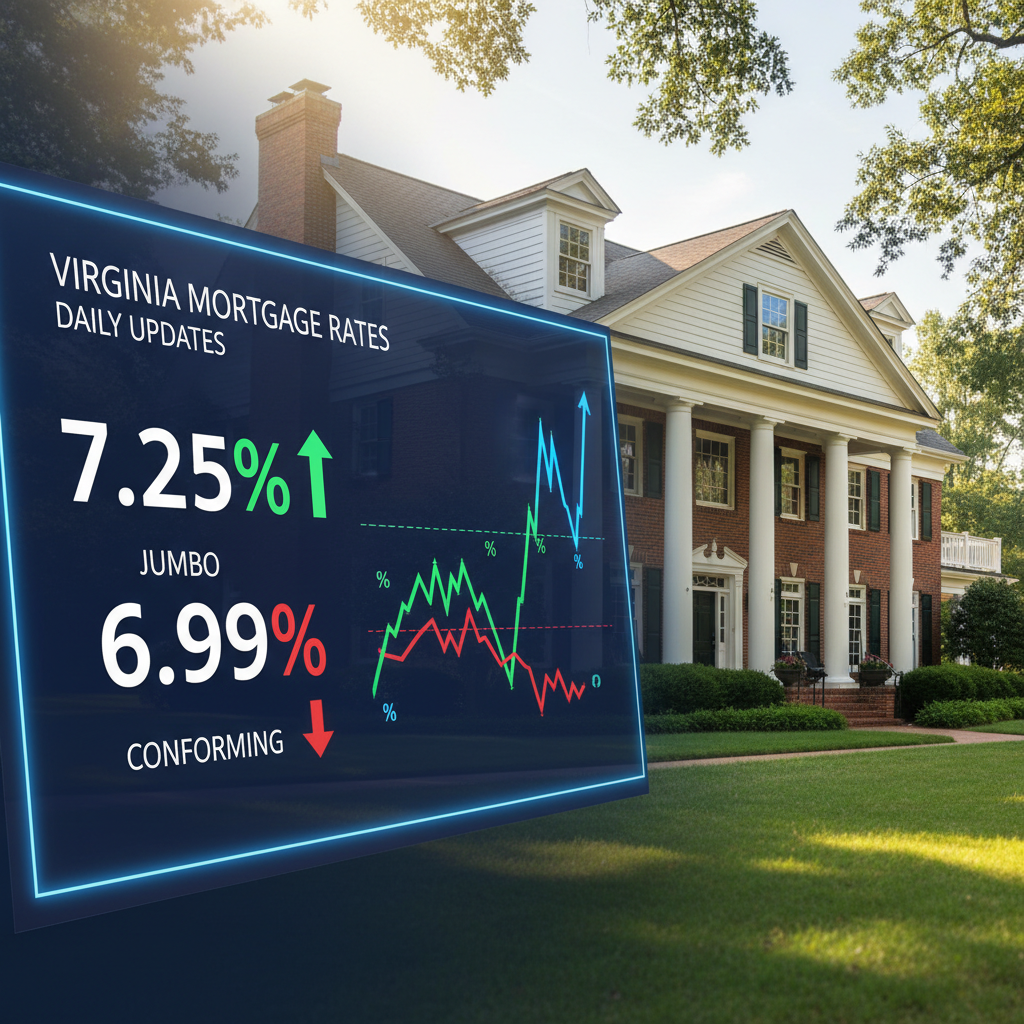
Daily mortgage rate updates for Virginia home transactions
Reliant Home Funding, Inc. NMLS #292473. Equal Housing Lender. This article is for informational purposes only. Rates and terms subject to change. Not a commitment to lend.